UBC: Waddell, The Black Museum
Apr. 27th, 2017 06:39 pm![[personal profile]](https://www.dreamwidth.org/img/silk/identity/user.png) truepenny
truepenny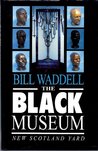 The Black Museum: New Scotland Yard by Bill Waddell
My rating: 2 of 5 stars
I regret to report that this book is just not very good.
Waddell is a poor writer, showing little regard for his words: e.g., "euphoria" when (my guess is) he meant "hysteria" in discussing Rose Mylett, "another name added to the endless list of murdered women who were believed to be Ripper victims, when in fact there was very little to connect them with the Ripper's modus operandi. Such was the euphoria created by the press of the time" (79). He's preachy and prone to platitudes; his prose is clumsy; and he has lamentably zero flair for true crime narrative. I admit he has an uphill battle in trying to write a book about the Black Museum, but still.
He perpetuates several myths about Jack the Ripper (there were no farthings, polished or otherwise, found near Annie Chapman's body) while taking other writers severely to task for perpetuating myths, and I'm afraid I lost a great deal of respect for him when he started defending Sir Robert Anderson's "Mad Jew" story.
I bought this book because the odds of my ever having the chance to visit the Black Museum are very close to zero. And it does provide at least some of what I wanted. But as a book, it was disappointing.
View all my reviews


no subject
Date: 2017-04-28 02:26 am (UTC)Is this in connection with the Ripper or some other famous case?
no subject
Date: 2017-04-28 12:21 pm (UTC)Bell, in Capturing Jack the Ripper, points out that this was errant nonsense from a legal perspective. (1) This alleged witness could be summonsed (subpoenaed) and compelled to testify; (2) even by Victorian standards this alleged suspect was inarguably insane, so he wouldn't be hanged, even if convicted. Paul Sugden, in The Complete History of Jack the Ripper, has demonstrated the holes in the rest of the story. Despite the fact that it seems to be corroborated by both Sir Melville Macnaghten and Chief Inspector Donald Swanson, this story just won't hold water, and it's not evidence found since 1993 (when The Black Museum was published) that shows that. It's just logic, a knowledge of Victorian law and police procedures (which the curator of the Black Museum should most certainly have), and a generous application of common sense.
I dislike Sir Robert and his bigotry and his bloated self-importance, so it pains me to see someone defending him--especially on Waddell's grounds, which is that Sir Robert, being an important Scotland Yard official, of course would have access to evidence that the police couldn't use in court and of course would know the truth. And, because he is an important Scotland Yard official, of course he wouldn't lie, mislead, or confabulate about it. Of course not, how could you even think such a thing?.
no subject
Date: 2017-04-28 06:09 pm (UTC)Feh.